September has come and so has the elderberry harvest. Here on the farm I only have a few elderberry bushes that were planted from small bare root starts a couple years ago, so they are still young and not very productive. I was only able to get enough elderberry to make some tincture and infused honey, which I am so excited about, however that isn’t quite enough to meet the needs of my ten person household through the winter.
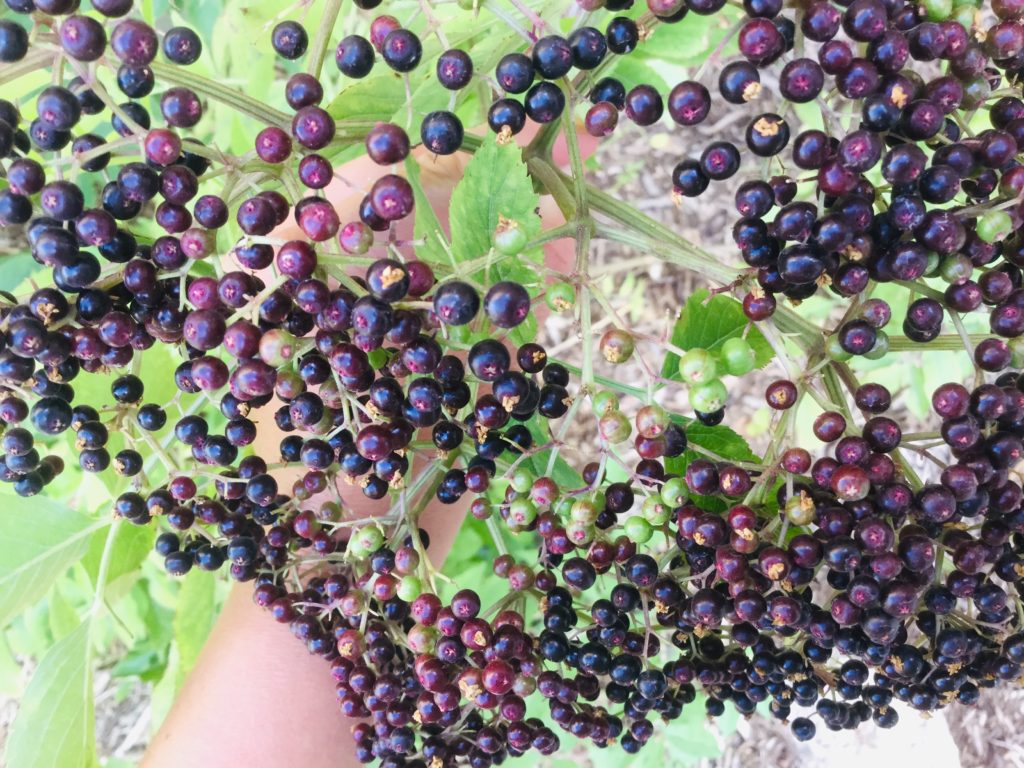
Many people around here and in many parts of the country forage for elderberries, they grow prolifically along ditches, creeks and up canyons. I have never wild foraged for elderberries, the farm is in a dry area and to find elderberries we must make a trip up to the mountains and find an area to forage that isn’t part of the National Park system (it is illegal to forage anything without a permit) and hasn’t already been found and harvested. That is a big time commitment with no guarantee of a harvest. Instead I order dried, organic berries to make syrup with. Someday soon I will have enough of my own berries as we plan to add more bushes to the farm.
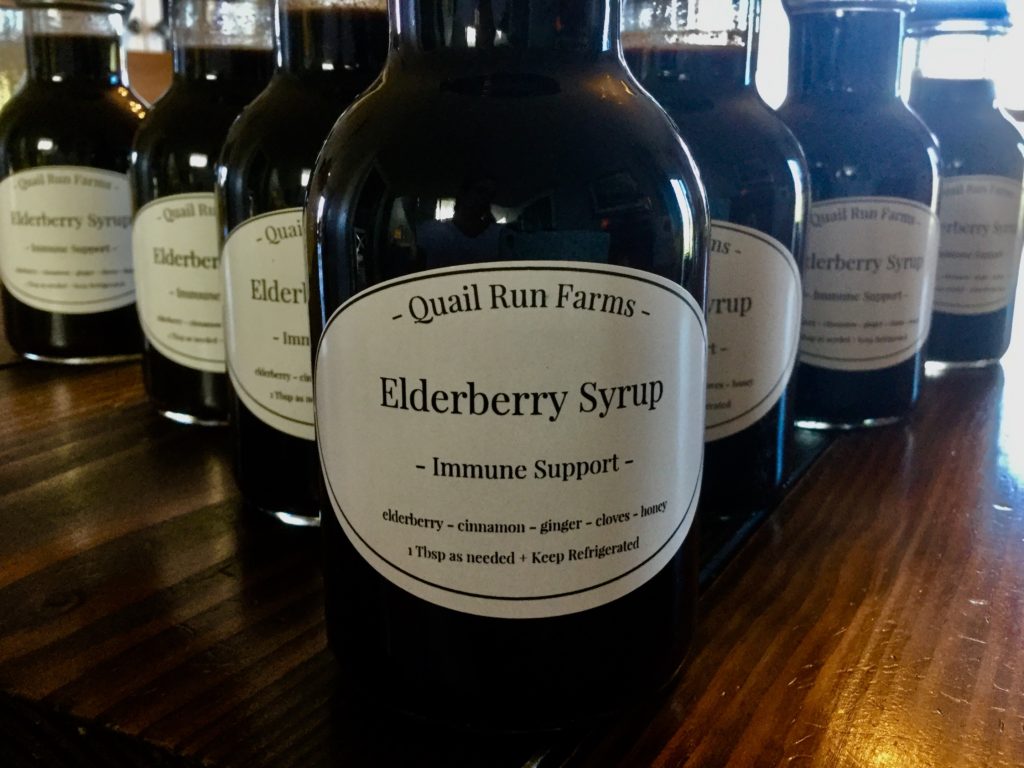
I have had great success in the past with my elderberry syrup in building my family’s immune system and shortening the duration of colds and the flu. This year I decided to make extra and sell at my farm stand, the first week I completely sold out. I am excited to add this to our offerings this fall and throughout the winter.
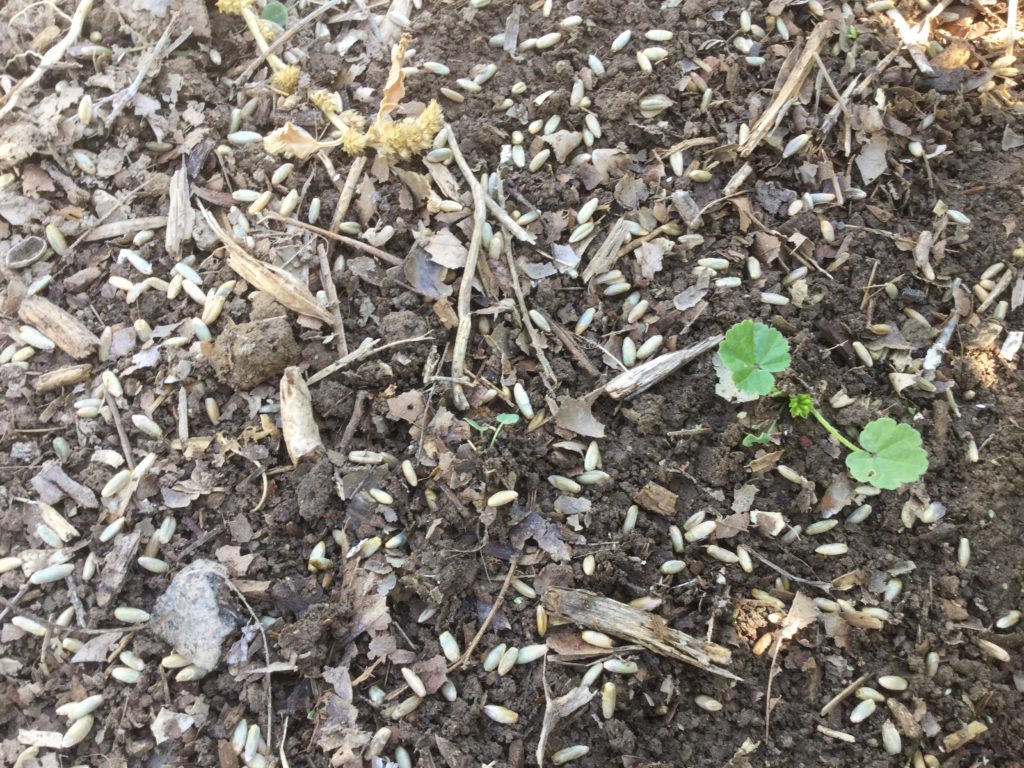
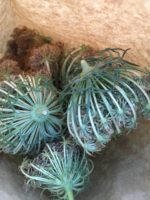
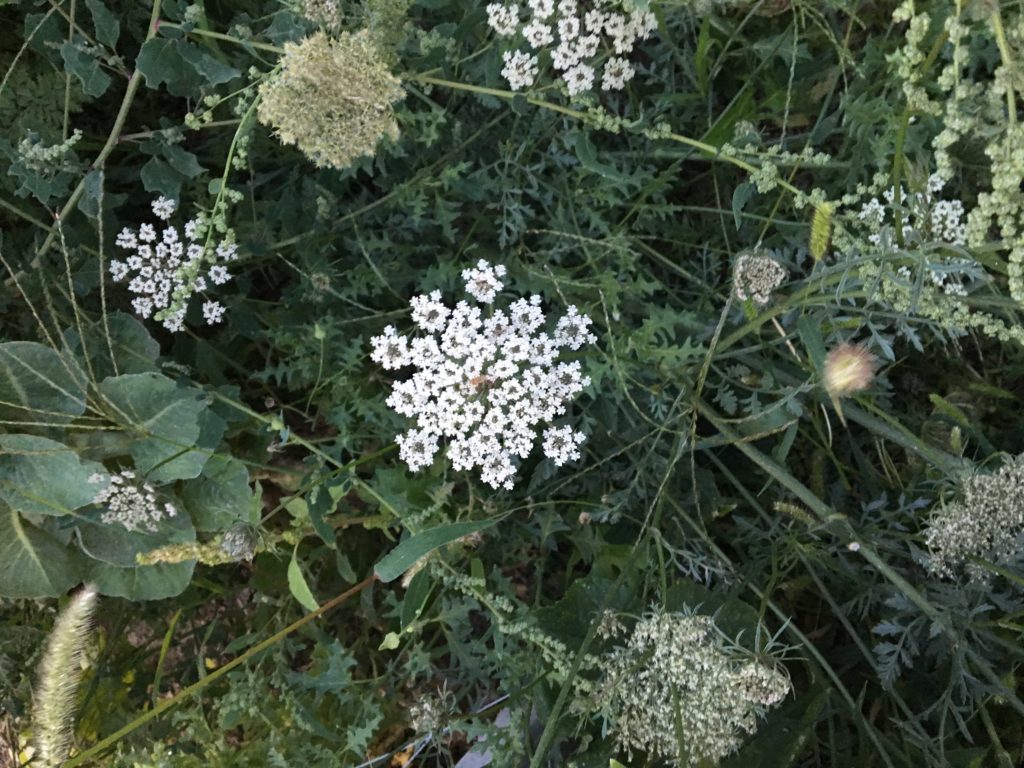 A few years ago I bought carrots seeds and the strangest thing happened. Instead of producing an edible root (well it may have been edible, but they certainly weren’t palatable) they went right to flower. This is strange, in that clearly I didn’t get the correct seed and typically plants in the carrot family are biannual and flower on their second year. It was a lovely mistake and I had a whole 50×4 foot row of beautiful Queen Ann’s Lace type flowers. I soon discovered that they were even better than beautiful, the bugs LOVED them. I had so many different types of pollinators that year that I decided they would always have a place in my garden. This has been quite easy in that they readily reseed themselves. In a permaculture garden it is very important to have plants that attract pollinators, the term is usually coined “pollinator strips”. We are preparing some new markets gardens from virgin land and will be adding perennial rows with bushes a few trees and flowers galore to attract pollinators. It is very easy to gather seeds from these flowers. As the flowers mature and the seeds ripen the heads curl inward, almost making a cup, I just clip off the head and drop it into a paper sack for safe keeping over the winter. This spring when its time to get our strips, or beds, of perennial plants ready those seeds will find a new home.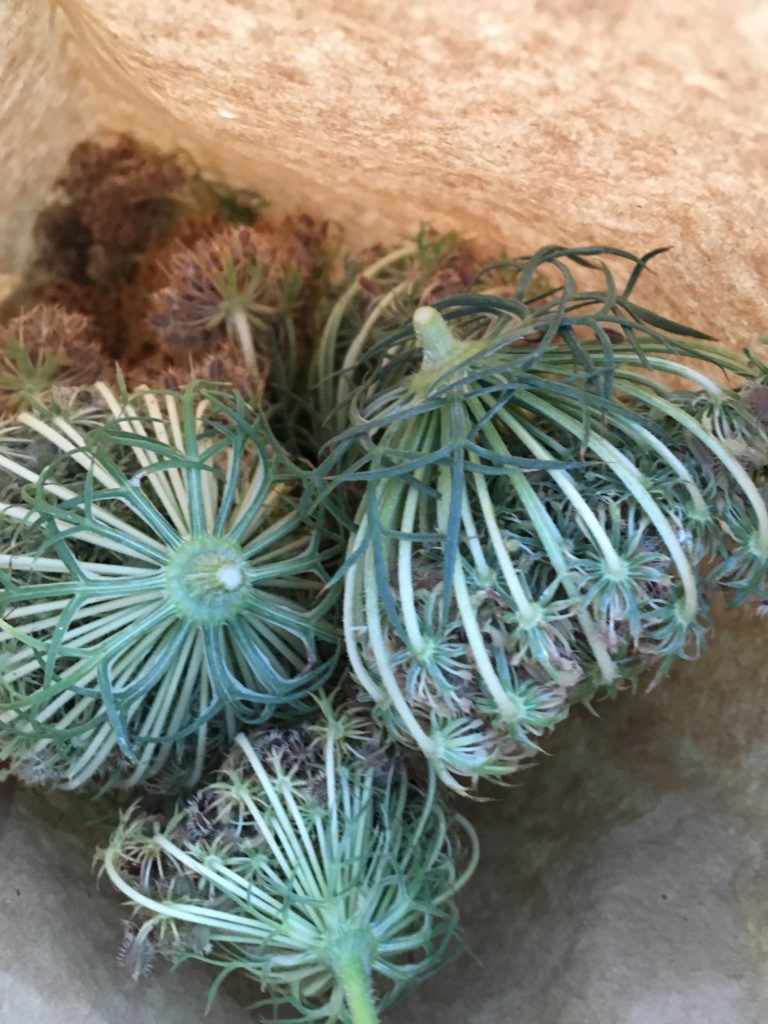
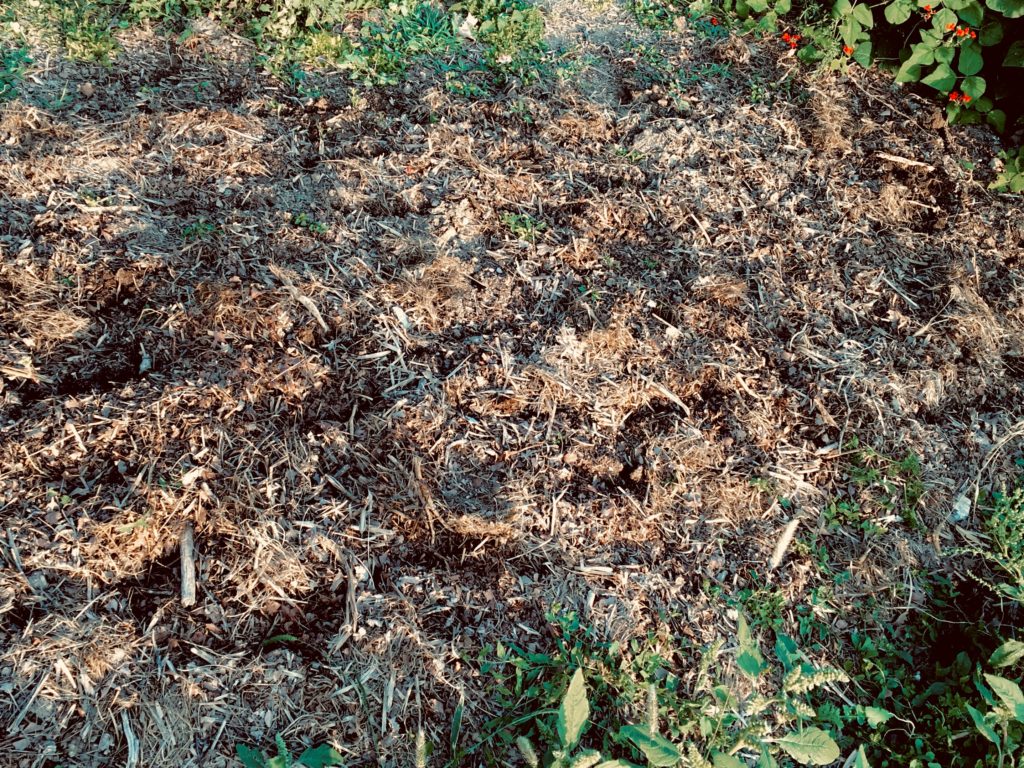
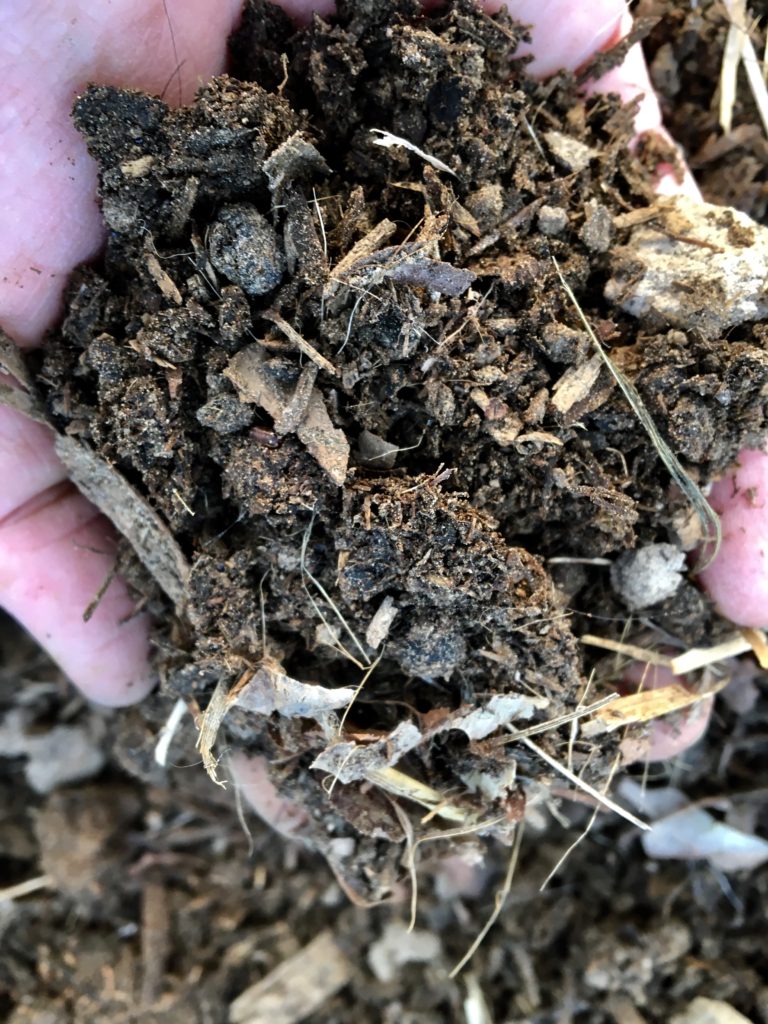
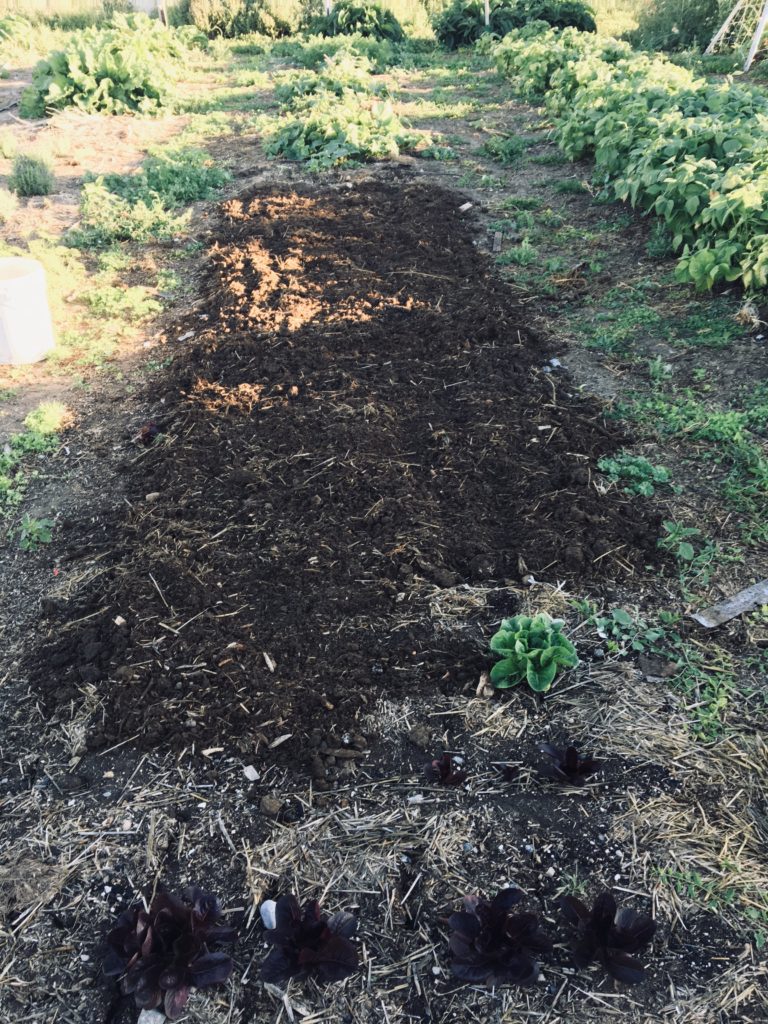
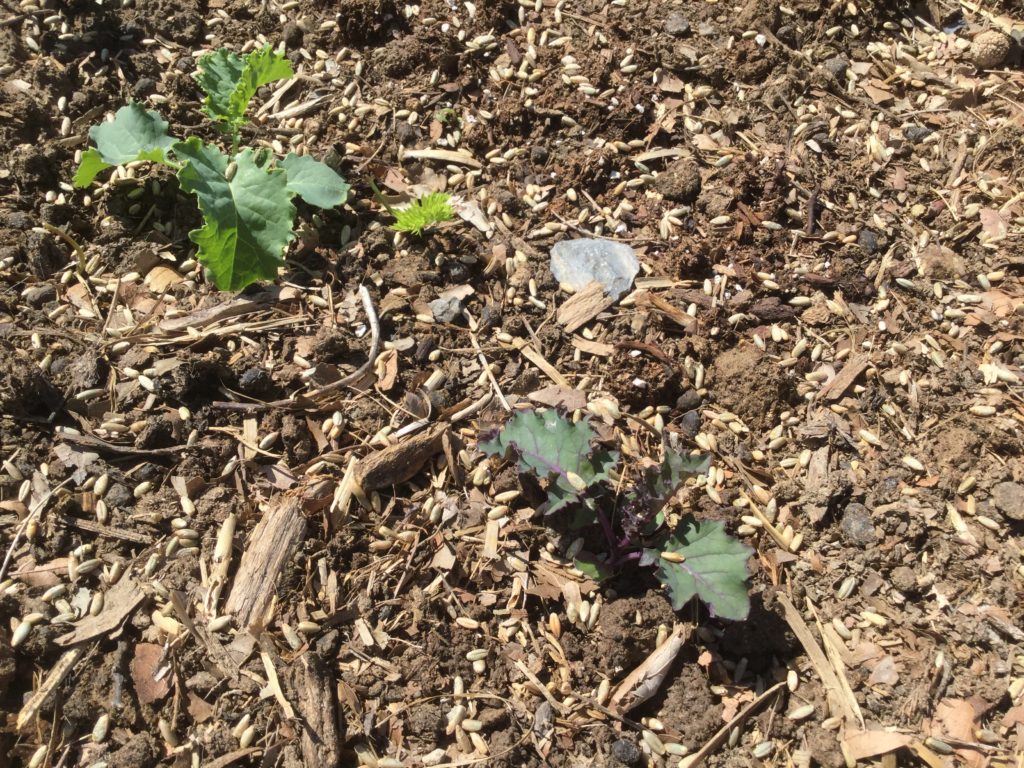
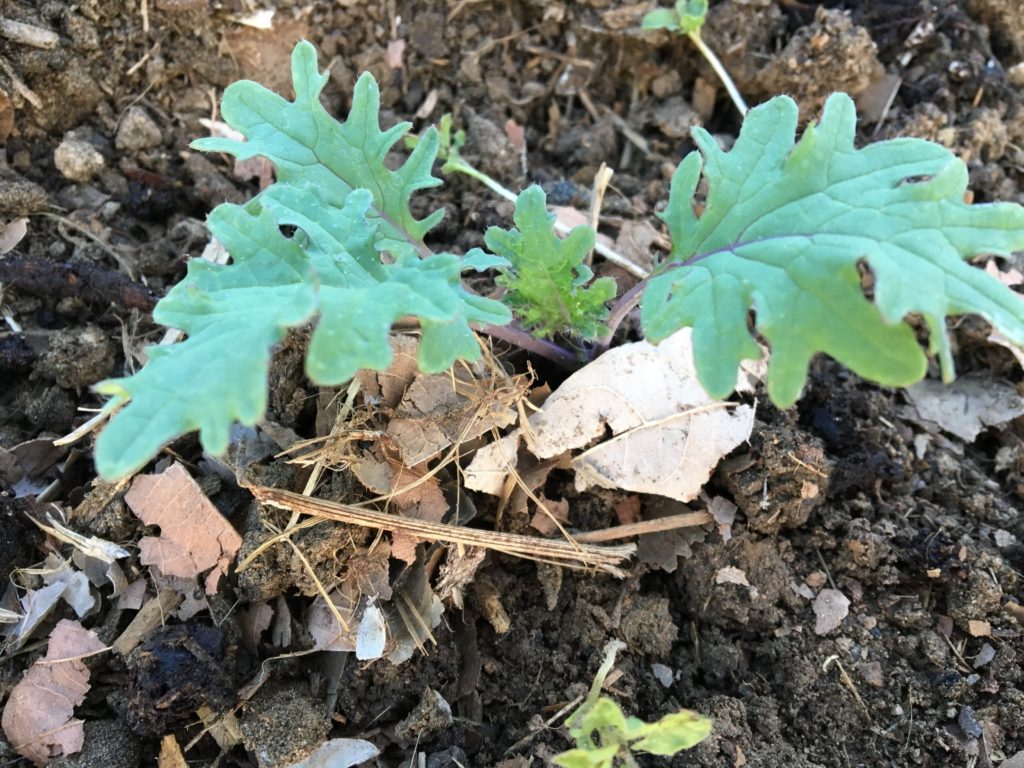
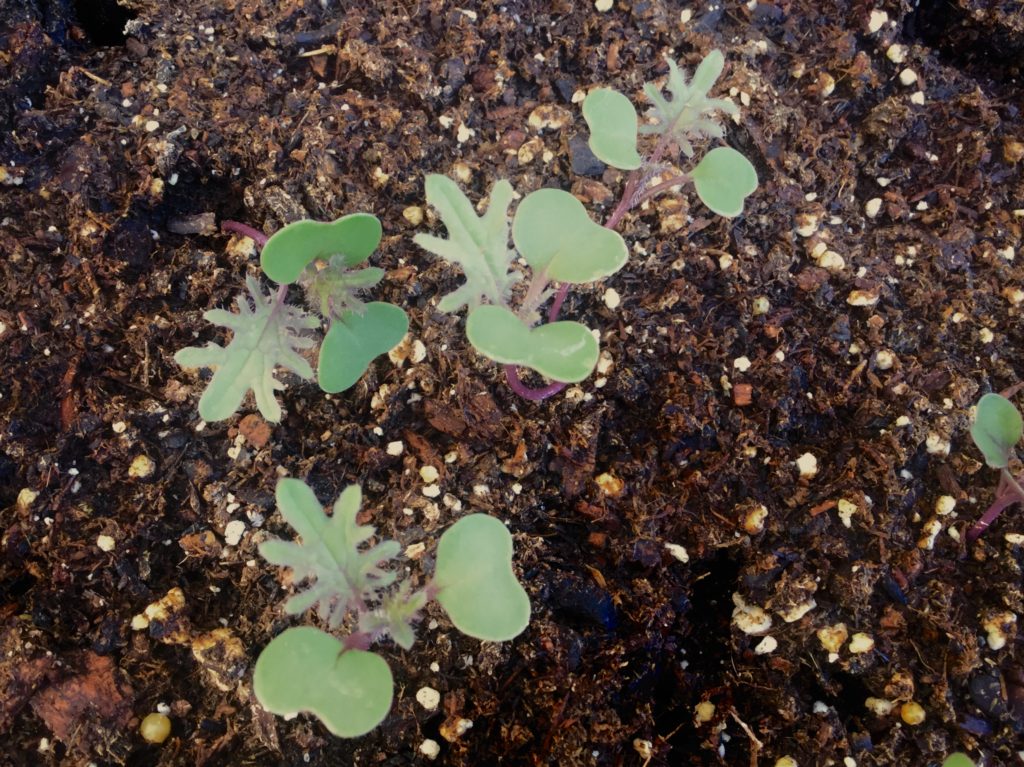
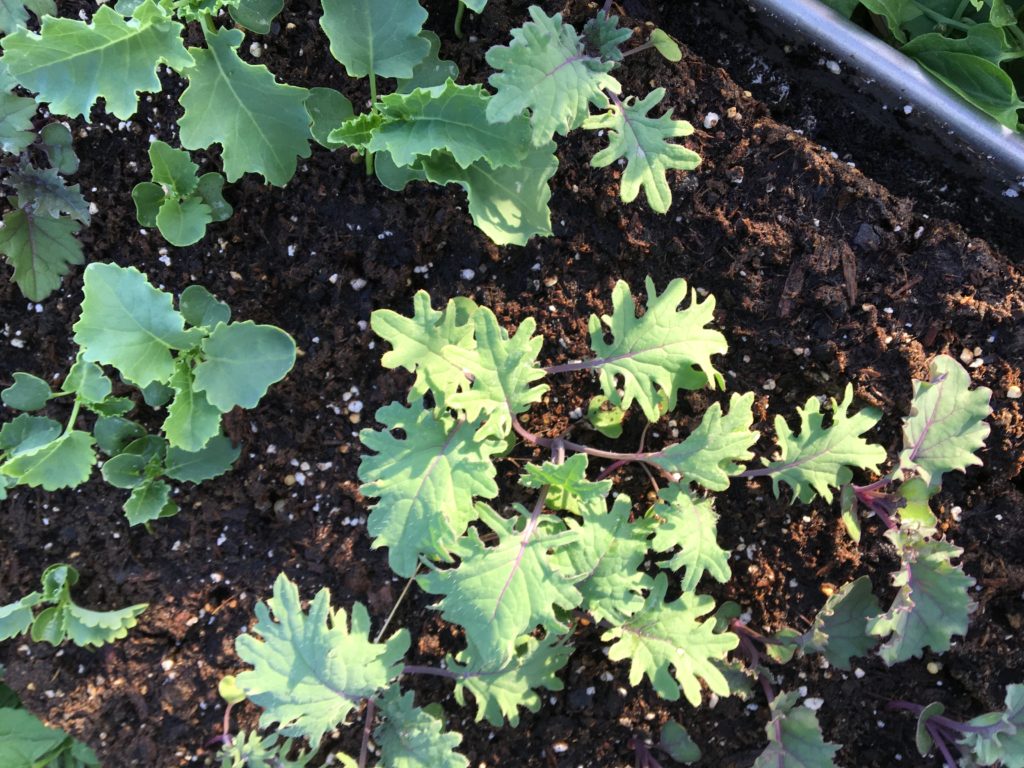 The little kale I had written about earlier are now big enough to go out into the garden. I prepared the bed, not with tilling, but using a fork I gently aerated, just lifting the fork a little, but not turning over the soil. The less disturbed it is the better for the soil health. I also added a nice layer or compost and gently raked it in.
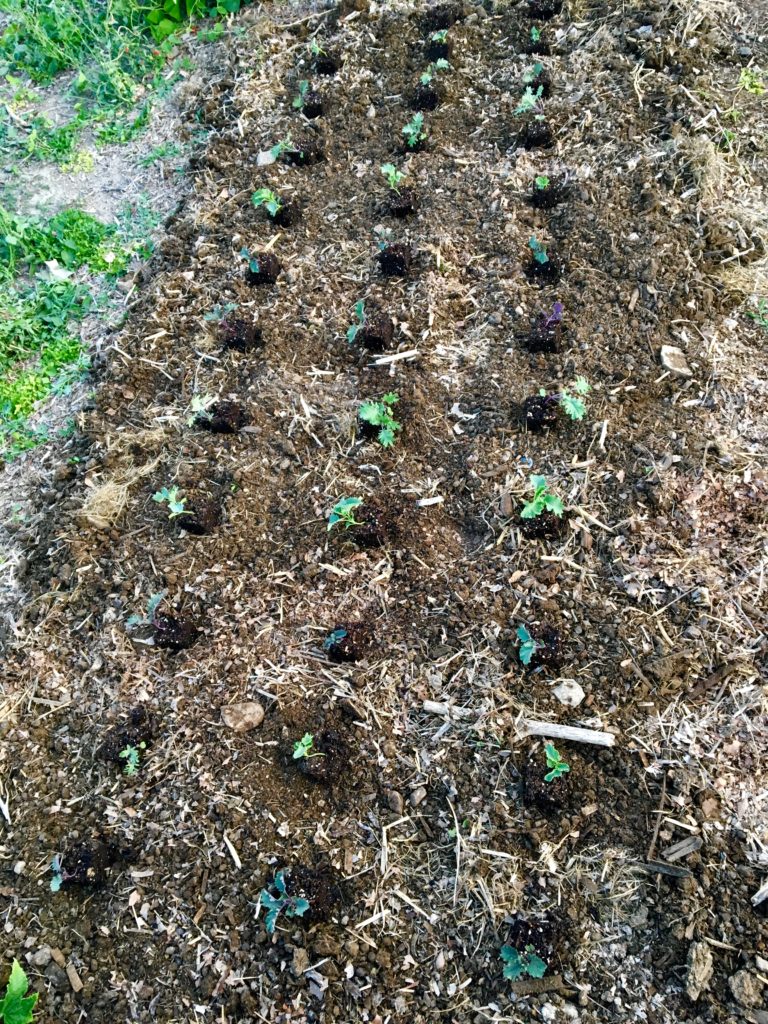 The seedlings were spaced evenly and planted with great care. I’m hoping to have some winter vegetables to add to the soup pot and perhaps have some to sell at market.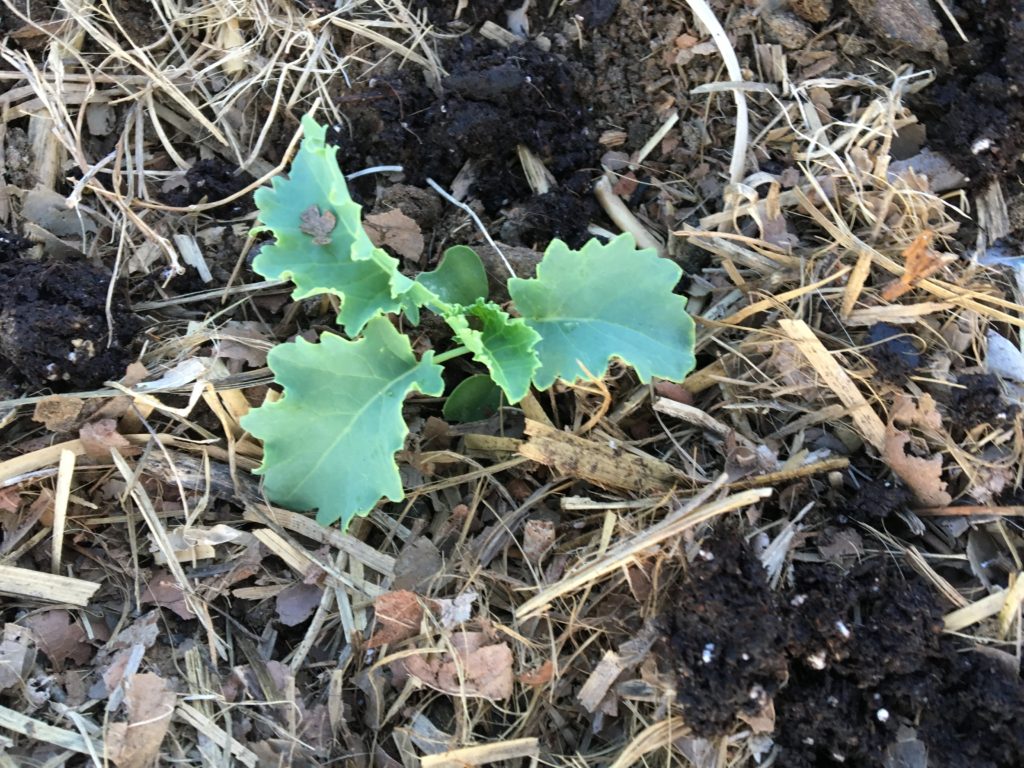
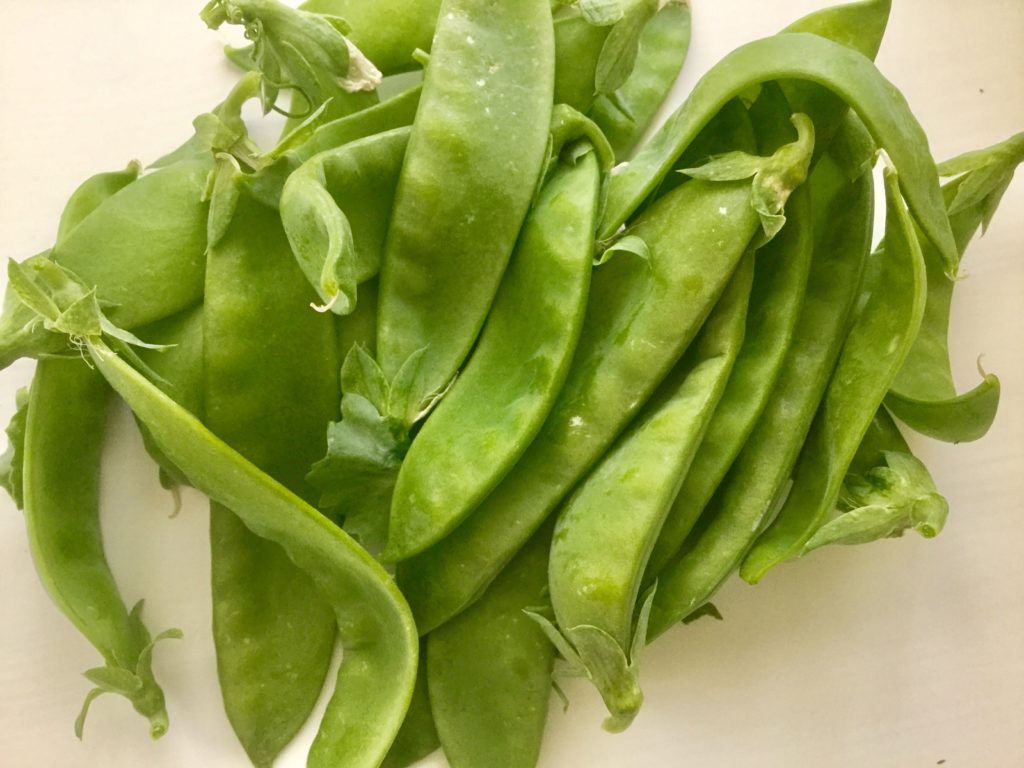 Today as I was out checking the garden I noticed that there were peas on the vines! The end of June our spring peas decided it was too hot and in a pout stopped flowering. They ended up in the compost pile and a new set of pea seeds were planted. I had been noticing a flower or two the last week, what I hadn’t noticed that under the leaves there were many more flowers than I had known. Today I saw them, beautiful snow peas, they should be productive well into October and I am so excited!