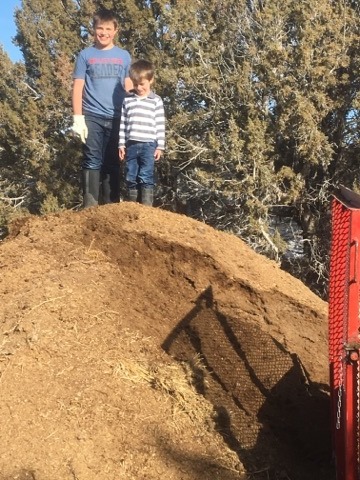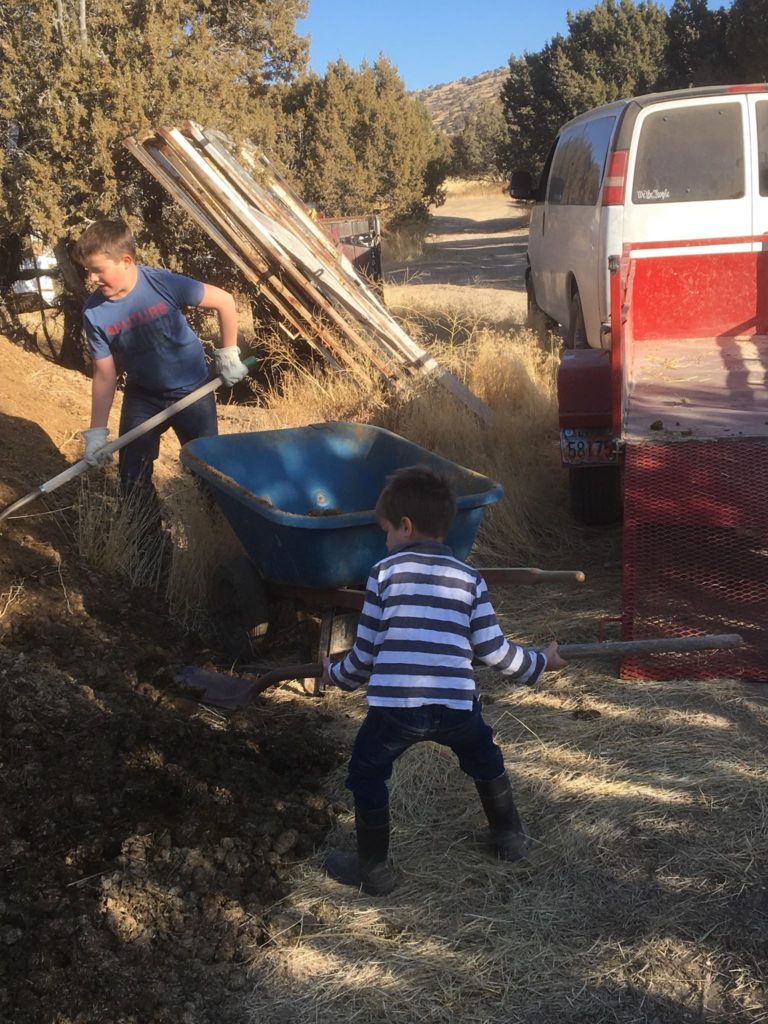
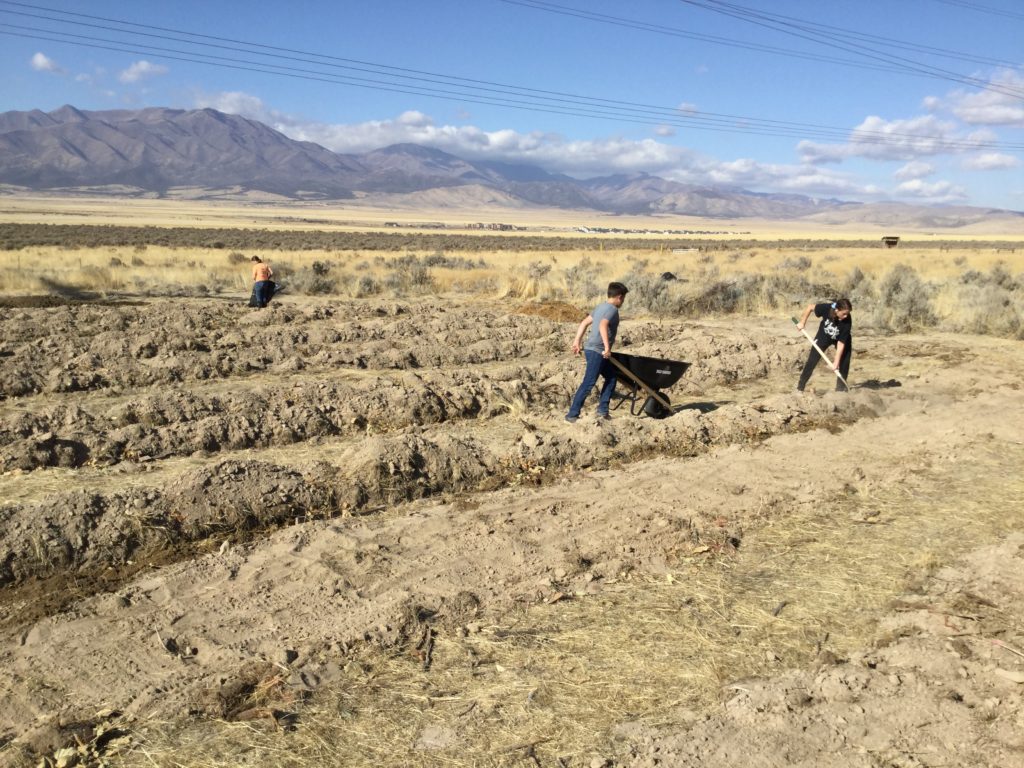
Working on the future raspberry patch. There are twelve 50 foot rows.
One of the projects we have been discussing and planning for almost forever has been a rather large raspberry patch. Ultimately we would like to run some sort of pick-your-own or selling shares of some sort, but to get to that point we have a lot of planning, planting and work to do.
As we have talked about before, the soil here is very barren and can be challenging to grow in. When its wet it is thick and sticky, when dry its almost like powder. We have found various permaculture methods that work very well in our arid climate and low fertility, including deep mulch, no-till and low-till. Another methods that is quite effective is the combination of hugelkultur and swales, often called “drop dead swales”.
Hugelkulturs are hills or various sizes made by piling old logs and branches then covering the up with compost and soil. The hugelkultur then naturally collects moisture in the old, dead wood and as it breaks down creates nutrients for the plants that are planted in the hugelkultur. The problem with classic hugelkulturs in our climate is that we have a hard time having enough natural moisture to keep it wet enough. We are just too dry, in my opinion. So we add in the swale. A swale is a man made natural depression in the land that helps collect rain water. Instead of the rain water running off it collects and soaks into the earth naturally crating pockets of fertility. a swale can be as big or little as needed.
We combine the two.
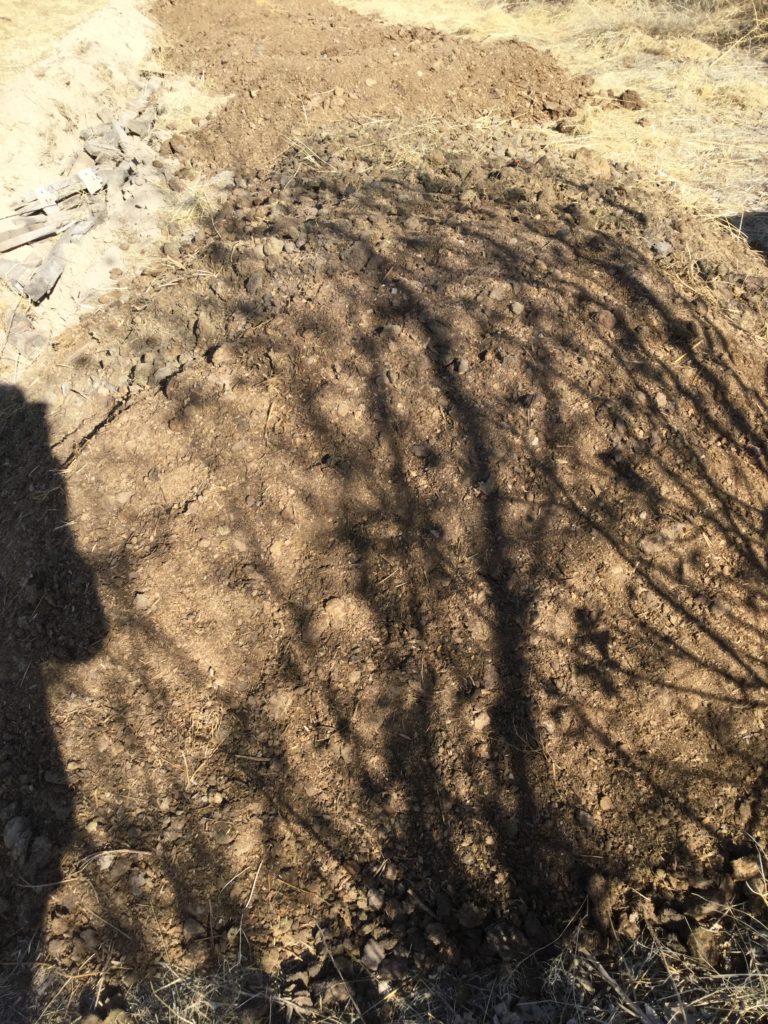
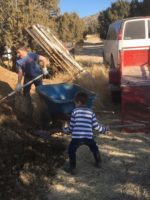
Loads and loads of horse manure hauled down from our very gracious neighbors.
In areas where we will be planting perennial beds and trees we use the “drop dead swale” method to help create water retention and fertility to places that cant always have piles of compost added easily. In theory once the perennial plants get going they will naturally create their own fertility as long as they have enough water.
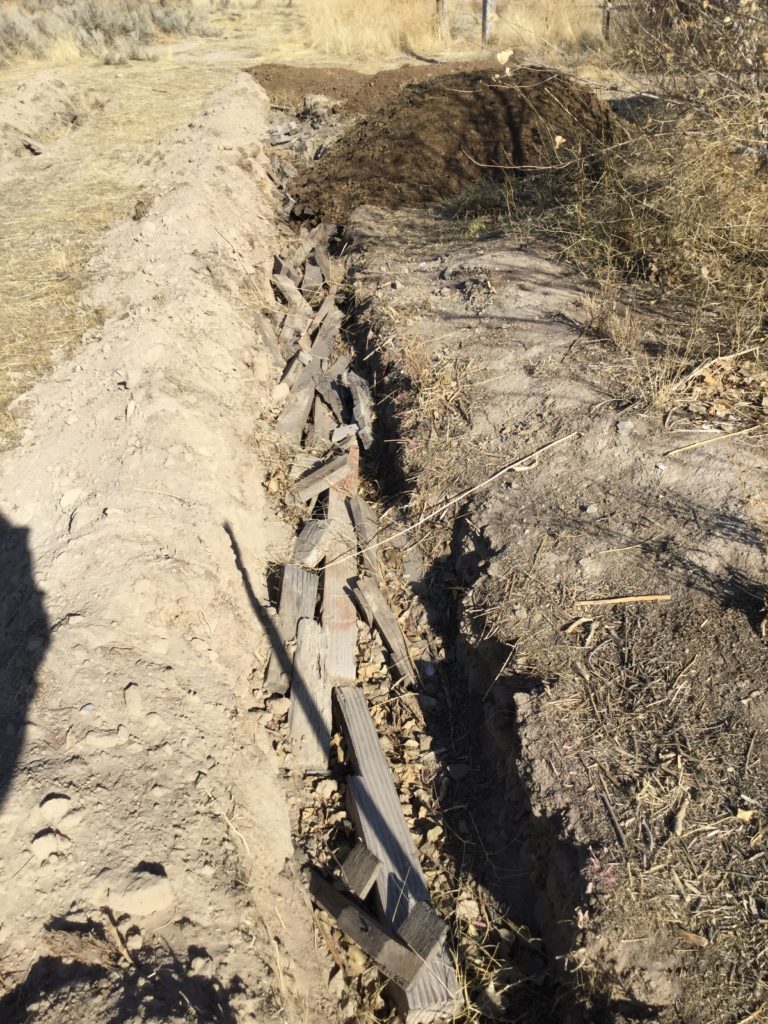
A swale filled with old wood, ready to have leaves and manure added.
To create a “drop dead swale” we first dig a nice big trench, about two feet deep. Then we add wood. Our property came with a lot of old, dry construction debris. Mostly 2×4 ends that have been laying exposed for close to 15 or more years. This stuff is dry, and perfect. We fill the trenches about half way.
On top of the old wood we add dead leaves and then horse manure and bedding. We almost completely fill the trenches. This adds organice matter that will increase the water storing ability of the soil and the manure adds nutrients. These will also attract beneficial micro-organisms and worms.
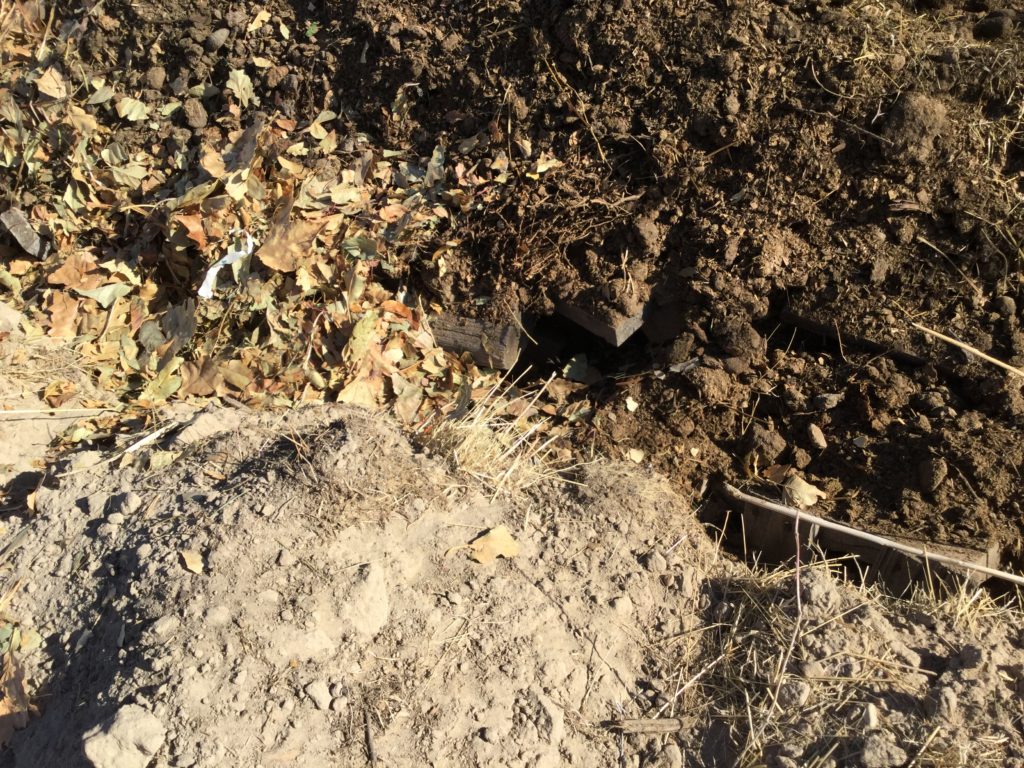
A swale with wood, leaves and manure.
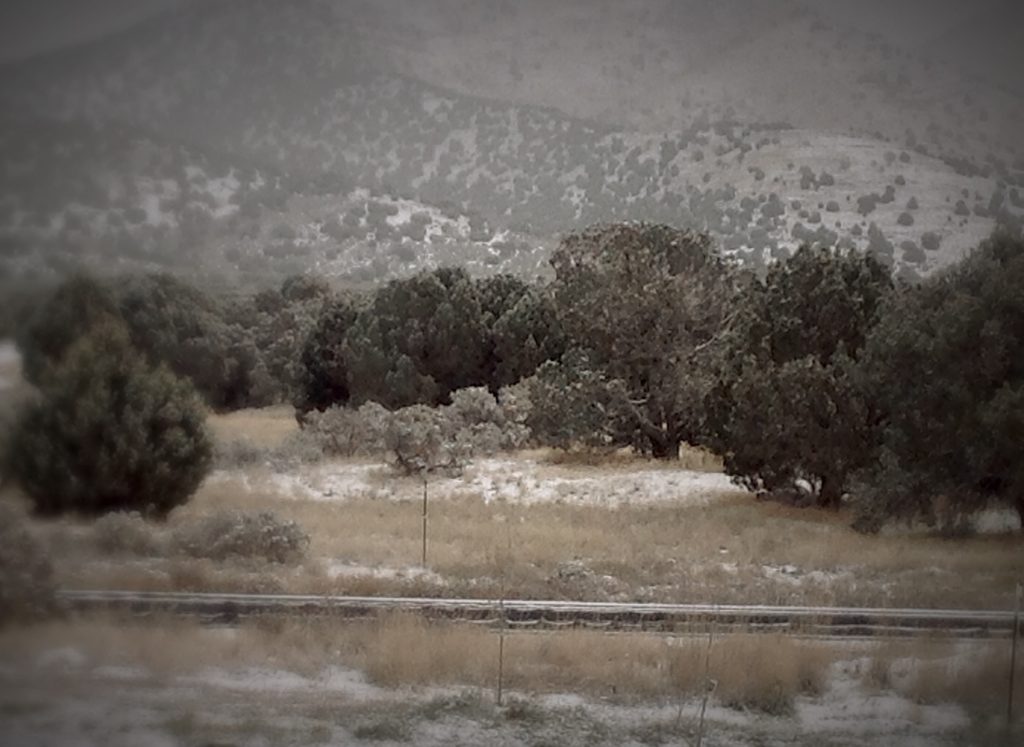
When the trenches are filled in there is enough dirt to leave a nice ridge on the downward slope side of the field, so as rain comes and snow melts the water wont just run off the land, it will stop and soak into the dry wood waiting for it. This will reduce the need for supplemental water during the long, hot, dry summers.
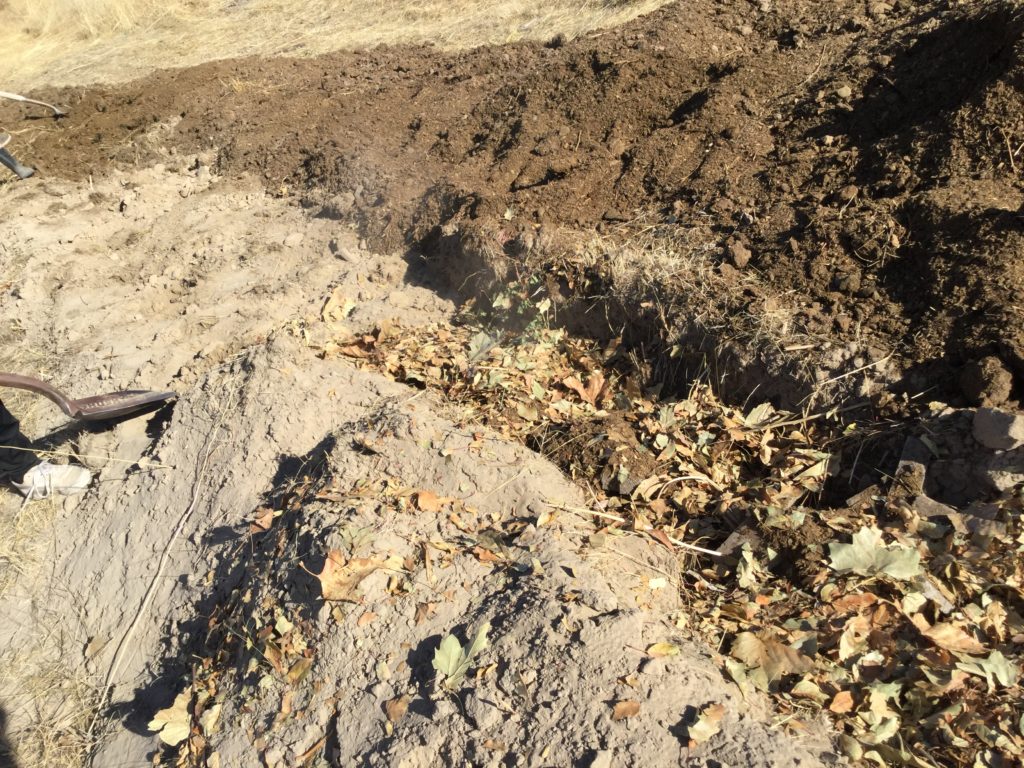
A swale being cover with a small ridge left to catch water run off.
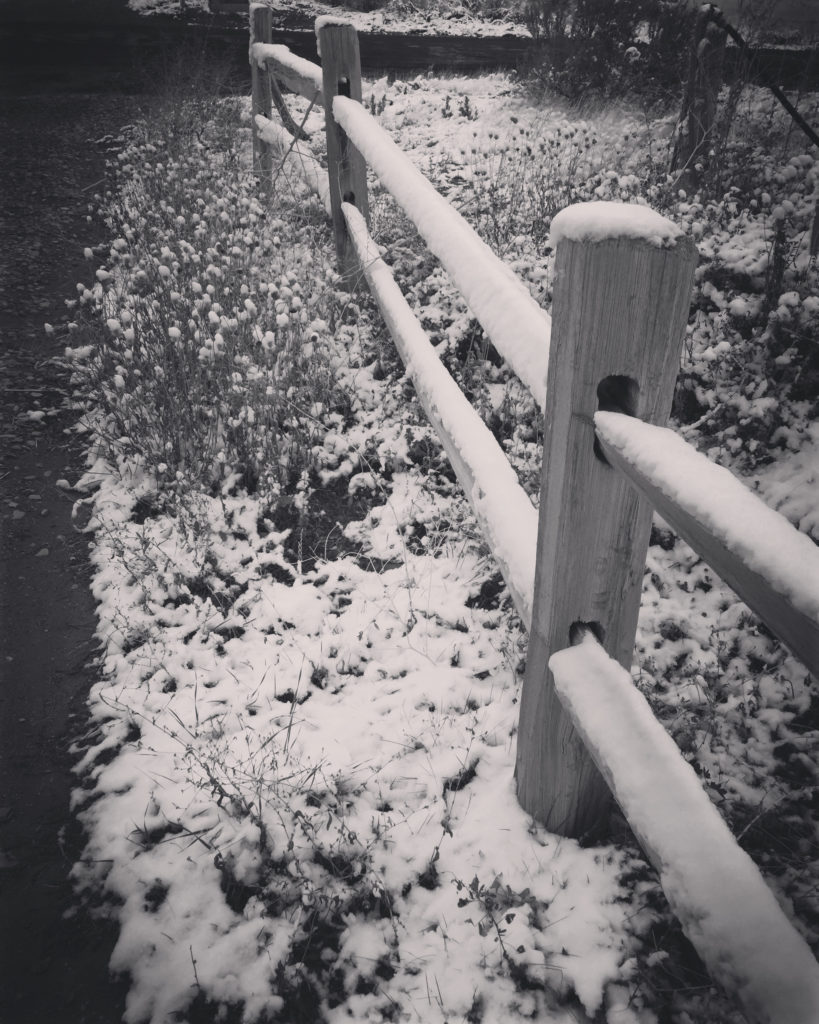
We are furiously working on this before the snow comes, we want it ready for raspberry planting this spring. This is long hard work, with the promise of fields of raspberries some day.
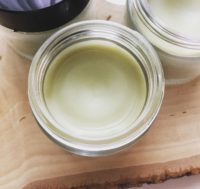
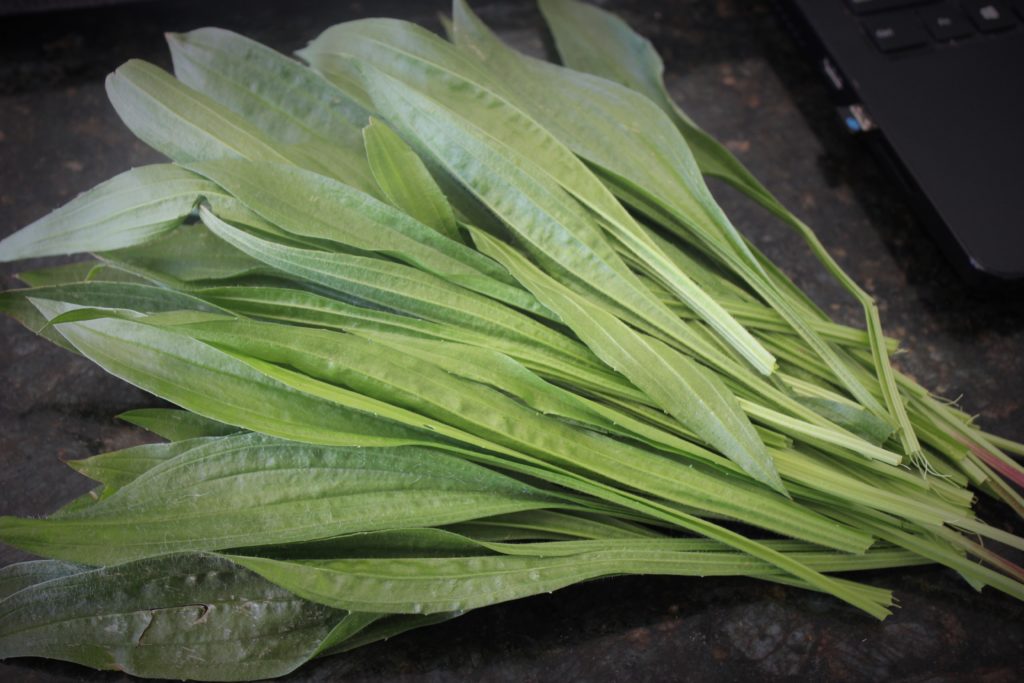 Plantain salve is one of my very favorite salves and I have been making it for several years now. I use it for any type of bug bite or sting and all sorts of cuts, scrapes and burns, with nine children, family and friends bumping around the place that means a lot of salve. During the summertime plantain can be used fresh, but it isn’t always convenient, chewing up a leaf, applying and covering a mosquito bite with a band-aid isn’t as simple as dabbing on a bit of salve. It is also nice to be able to keep a small pot in my purse or bag to have on hand when I am not where plantain is growing. So every fall and winter I am sure to make plenty of salve to have on hand and some to sell to family and friends. The process though starts in the summer time when the days are long and the plantain is thick under the apple trees.
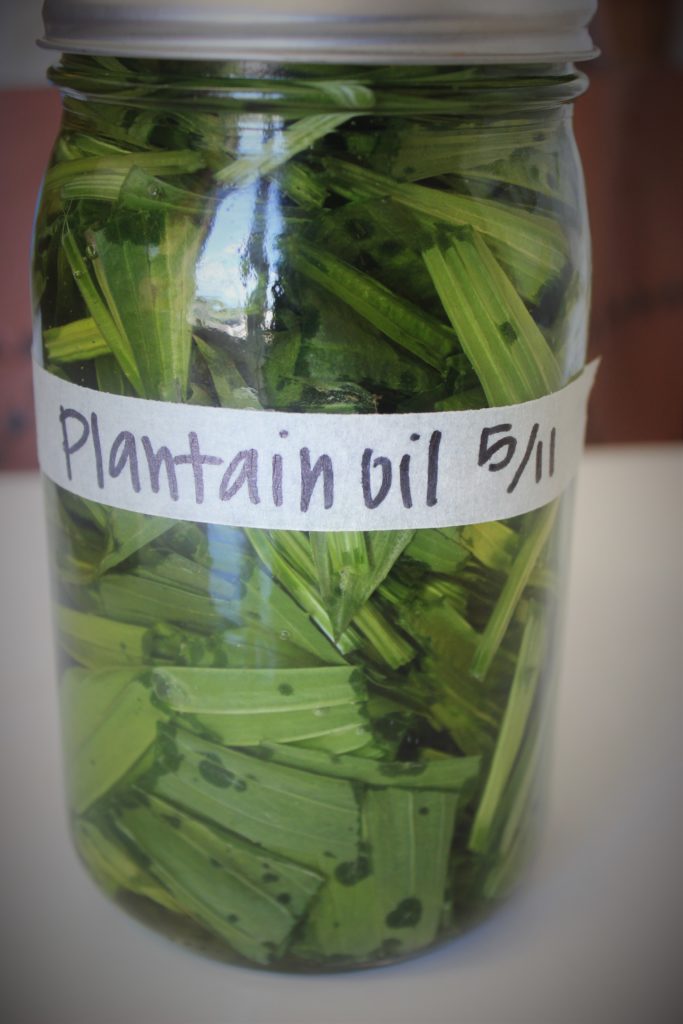 Handfuls of plantain is harvested, washed, cut and packed in quart bottles, then pure olive oil is poured over the top until all the plant matter is covered. It then sits in my sunny kitchen window for at least six weeks, being shaken daily, sometimes longer. This makes a beautiful green infused oil. this oil itself is nourishing and healing for the skin, but a bit messy.
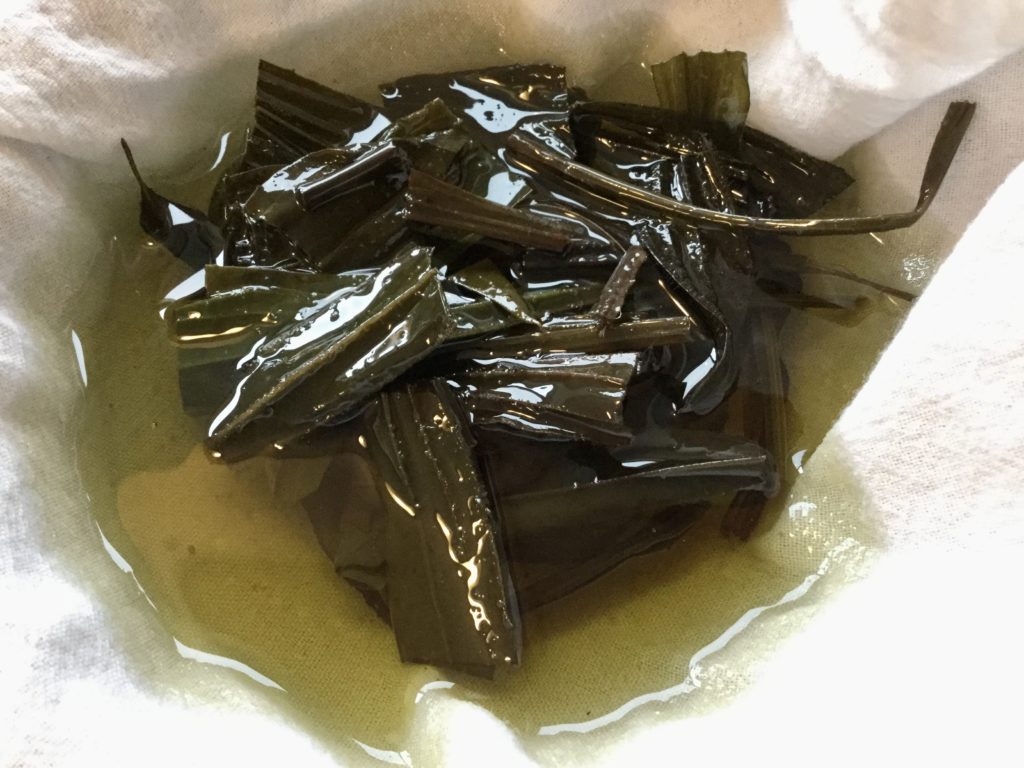 When the oil is properly infused it is poured into a fine wire mesh colander that is lined with a clean cotton cloth to slowly drip for several hours. After all the oil has dripped through I will take and ring it tight, getting every last drop of the oily goodness. My hands are so happy after these days of wringing oil out, the plantain infused oil is so good for the skin.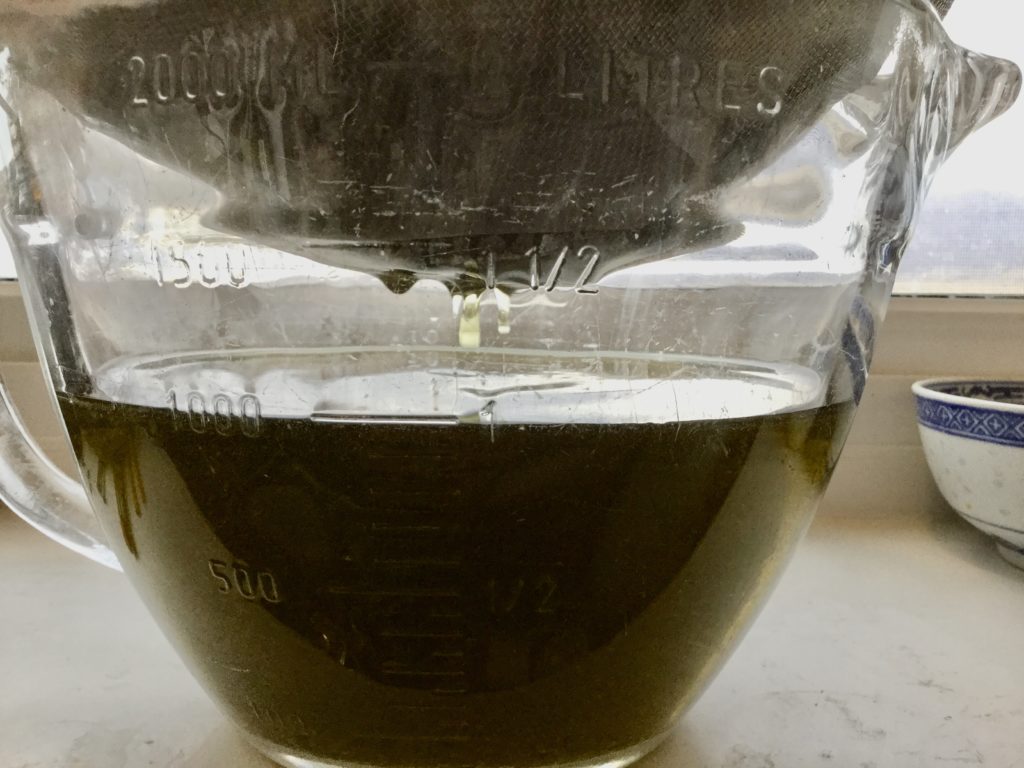
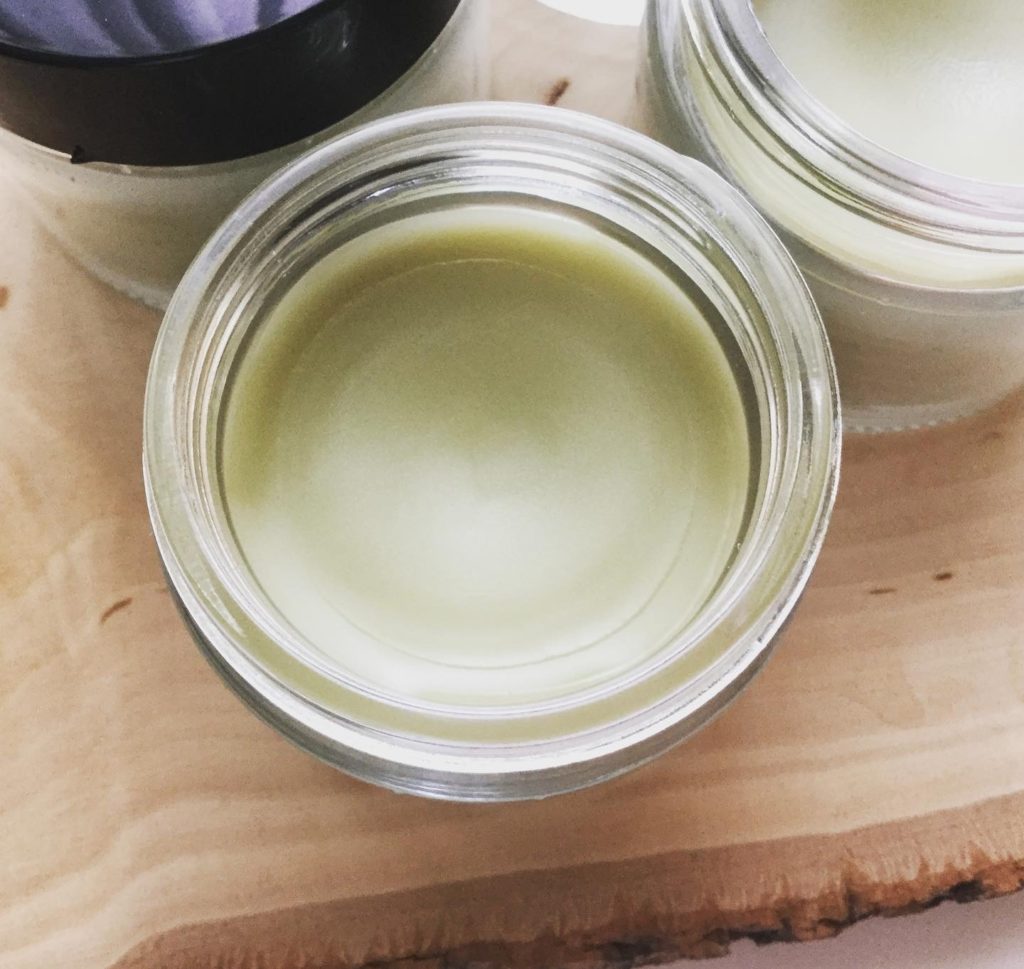
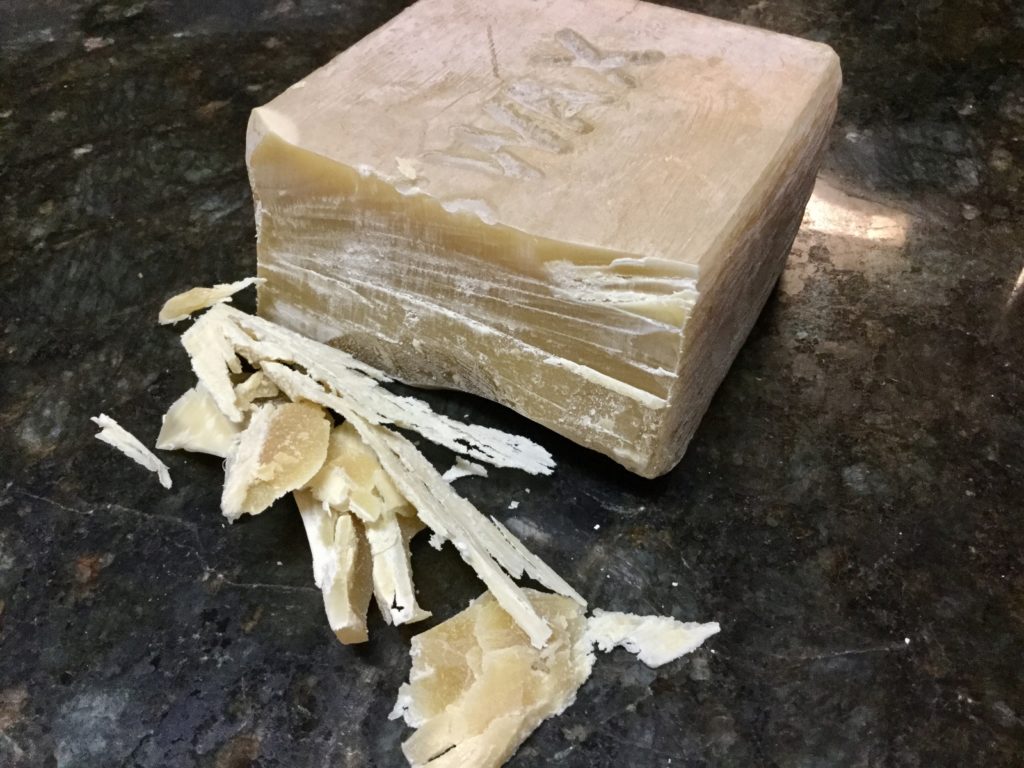
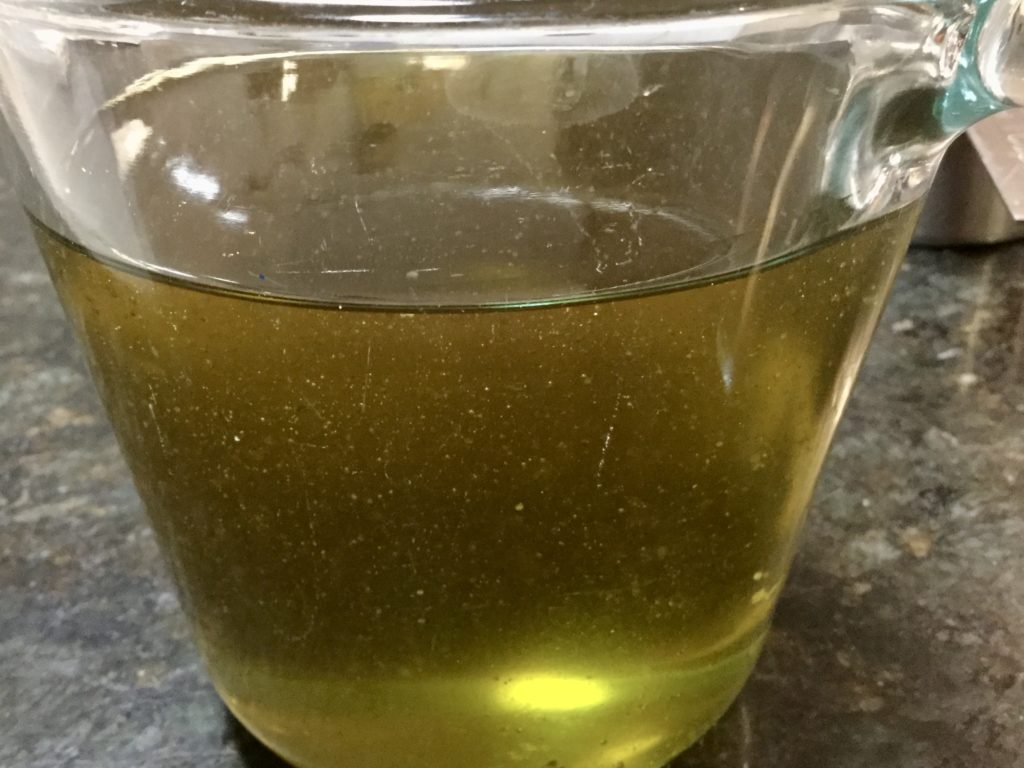 After the Plantain has been strained out of the oil it is stored in quart jars in the refrigerator to keep it as fresh as possible until salve making time. I, using low heat, slowly melt beeswax in with the oil. As soon as the bees wax is completely melted I take the salve off the heat and let it cool some more, then I add lavender essential oil and yarrow essential oil. While still warm is it is poured into jars and closed tightly. They are kept refrigerated until used.
 My family uses this salve exclusively, even my littlest kids know where the “green salve” is and know to put it on cuts, scrapes and burns. Plantain salve mixed with calendula salve is very effective when dealing with suborn diaper rash. We always have a little jar sitting by my tinctures and herbs ready for use and usually you can find a jar in my purse or diaper bag.
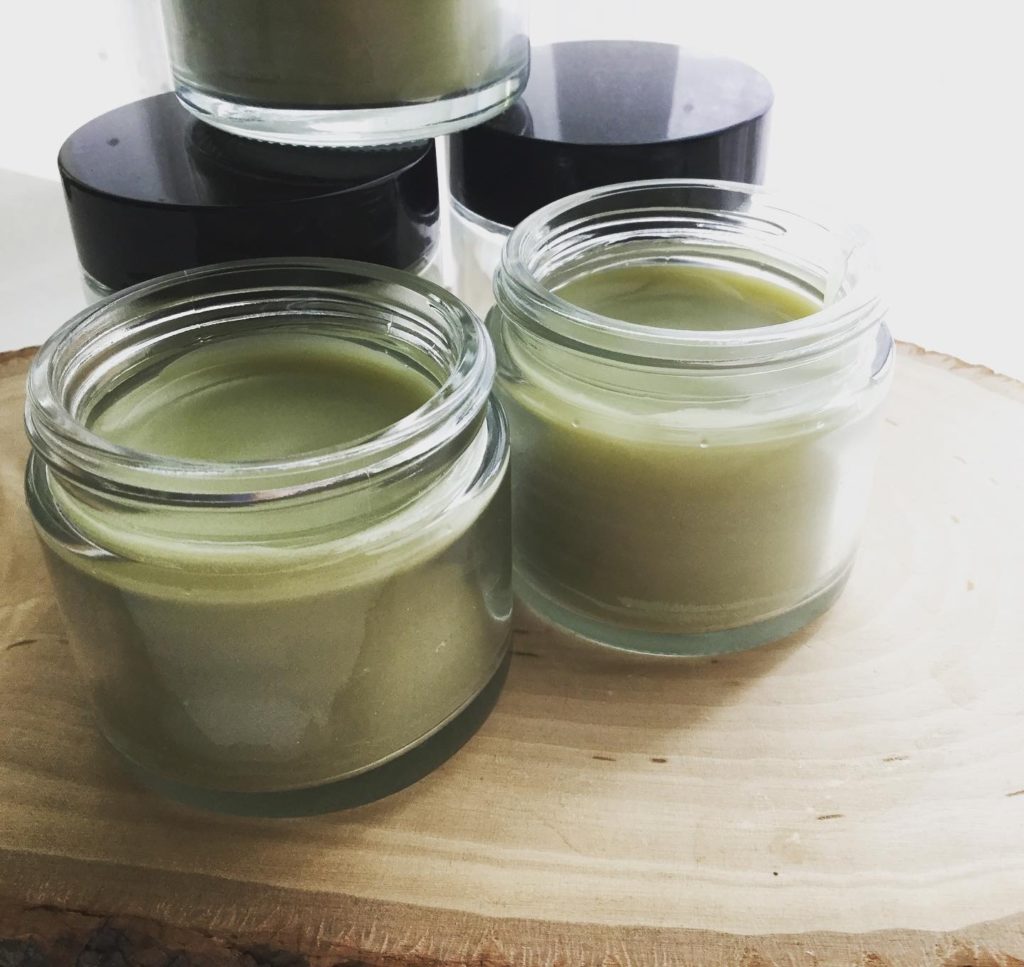 This year we will be sharing our favorite “green salve” with our customers in our shop and at the farmers market. This green goodness is too wonderful not to share!